

Eyelid Surgery
The core eyelid lift technique is similar for men and women, but the aesthetic goals are not always identical. Many men naturally have a stronger brow position and a fuller upper eyelid, while many women may prefer a smoother, more defined lid contour. Preserving these individual features is important in order to maintain a natural look. Overly aggressive eyelid surgery in any patient can lead to a hollow, sunken, or surgically altered appearance. Careful planning and refined technique help avoid that outcome and support results that look like a refreshed version of the patient, not a different person.
Natural looking results are the goal in all cosmetic procedures, and eyelid surgery is no exception. Today’s blepharoplasty techniques are generally less invasive for both men and women. Surgeons now better understand that facial aging often involves loss and shifting of fat, not only excess skin. By preserving or repositioning fat during eyelid surgery, it is possible to reduce bruising and swelling and maintain youthful contour around the eyes. In some cases, a facial filler is also placed at the time of surgery to soften hollows or dark circles beneath the eyes and create a smoother transition between the lower eyelid and cheek.
Interested in how eyelid surgery could help you look more rested and youthful, and wondering whether you are a good candidate for treatment? Dial (239) 415-7576 today to schedule a consultation with the experienced Dr. Patrick M. Flaharty and his trusted team!
Eyelid Surgery Before & After
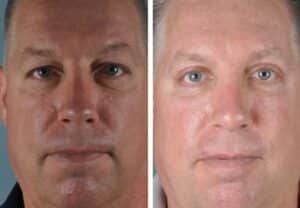
Click Here To View Our Gallery Page!
What Is Blepharoplasty for Men and Women?
Blepharoplasty is a highly customizable plastic surgery procedure designed around each patient’s unique facial anatomy and goals in order to restore a more open, refreshed eye area. Both men and women choose eyelid rejuvenation, also called an eyelid lift, to address heaviness, puffiness, and age related changes around the eyes. Many patients report that their results help them look younger, healthier, and more alert. When planning blepharoplasty, factors such as brow position, eyelid fold shape, skin thickness, and facial proportions are taken into account to respect either a more masculine or more feminine look, depending on the individual.
Are There Different Kinds of Eyelid Lift Surgeries?
There are two main types of blepharoplasty that may be performed alone or in combination, depending on the concerns being treated. These are lower blepharoplasty and upper blepharoplasty.
Lower blepharoplasty focuses on the skin and fatty tissue beneath the eye. This area includes the tear troughs and the transition from the lower eyelid to the upper cheek. The goal is to reduce puffy, baggy lower lids that often become more noticeable as tissues loosen with age. Through a carefully placed incision, the surgeon removes or repositions fat to create a smoother contour. The skin is tightened to the correct degree, any excess is trimmed, and the incision is closed with fine sutures for a subtle result.
Upper blepharoplasty is the cosmetic eyelid surgery that restores a more open look to the eyes and a more energetic expression to the face. This procedure is performed by measuring and removing the appropriate amount of loose upper eyelid skin that has accumulated over time. Because there is typically very little fat in the upper eyelids, this technique mainly focuses on lifting and reshaping the skin while preserving a natural lid crease and lid shape.
Can Eyelid Surgery Remove My Dark Circles?
Dark circles under the eyes can have several causes. Skin tone, genetics, and lifestyle may play a role, but the most important factor is often how light interacts with the contours of the lower eyelid and upper cheek. When the area beneath the eyes is hollow or shadowed, even mild fat loss or shifting can make darkness more obvious. There are several ways to address this concern.
Depending on how much fat is present and how the lower eyelid is shaped, a doctor may recommend:
- Dermal fillers to soften hollows and improve light reflection
- Fat transfer as a long lasting, natural-volume option using the patient’s own fat
- Lower blepharoplasty to reposition or redistribute fat pads for a smoother contour
When volume and contour are corrected, dark circles often appear lighter because the shadowing effect is reduced. In many patients, the improvements from surgical fat repositioning can be long lasting.
How Does Upper Lid Blepharoplasty Differ between Men and Women?
Upper eyelid blepharoplasty is not generally considered a complex surgery, but subtle differences matter. An experienced, qualified plastic surgeon will consider the unique anatomy and aesthetic goals of each patient. In women, the aim may be a cleaner, more defined lid crease and a smooth, lifted appearance. In men, the goal may be to maintain a slightly heavier, stronger upper eyelid and brow while removing only the skin that truly causes heaviness or hooding.
If these nuances are not respected, there is a risk of creating an upper eyelid shape that looks too feminine for a male patient or too hollow and flat for any patient. Thoughtful planning and meticulous technique help preserve a patient’s natural character while refreshing the eyes.
How Does Lower Lid Blepharoplasty Differ for Men and Women?
The lower eyelids tend to be less gender defining than the upper lids. For both men and women, excellent results from lower blepharoplasty depend on proper handling of fat and skin. The surgeon’s priorities are to smooth puffiness, reduce bagginess, and avoid excessive removal of tissue that could lead to hollowing or pull down the eyelid.
By repositioning or conservatively trimming fat and gently tightening the skin, the surgeon can create a more rested, youthful look under the eyes in patients of any gender.
How Long Is the Recovery from Eyelid Surgery?
Blepharoplasty is generally a conservative outpatient procedure, and most patients return to everyday activities fairly quickly. In many cases, patients are advised to take about one week off from work and more demanding tasks so the body can focus on healing.
There is usually only mild discomfort after upper or lower eyelid surgery, and this is often managed with over the counter pain relief. Bruising and swelling are common for the first several days and then fade significantly over five to seven days. At that point, any remaining discoloration may be camouflaged with concealer if desired. After approximately one week, most patients feel comfortable returning to work and light activities. Within ten to fourteen days, many can resume most normal routines, including exercise, once cleared by the doctor.
At all of our Southwest Florida practices, eyelid surgery is performed under local anesthesia with light intravenous sedation to keep patients relaxed and comfortable. Blepharoplasty is frequently combined with other facial rejuvenation procedures including endoscopic brow lift, facelift, neck liposuction, injectable facial fillers, chemical peels, and more.
Dr. Flaharty focuses exclusively on facial cosmetic surgery. He is a board certified ophthalmologist and is fellowship trained in ophthalmic plastic and reconstructive surgery as well as facial cosmetic surgery. With more than 20 years in private practice and over 20,000 facial procedures performed, he brings extensive experience to every eyelid surgery. His offices in Fort Myers, Naples, and Bonita Springs provide convenient access for patients throughout Southwest Florida who are seeking advanced facial rejuvenation.
SEE THE RESULTS
for yourself with our real patient
before-and-after photos
Speak With Dr. Flaharty About Eyelid Surgery In Fort Myers
To learn more about how eyelid surgery at our Naples, Fort Myers, and Bonita Springs, Florida-area practice can revitalize the appearance of your eyes and refresh your entire face, Request a consultation using our convenient online form, or call the office directly at (239) 415-7576. The knowledgeable Dr. Flaharty and his team look forward to serving you!
Frequently Asked Questions
Am I a good candidate for eyelid surgery?
Good candidates are generally healthy adults experiencing drooping eyelids, under-eye bags, or excess eyelid skin. Your cosmetic goals and medical history will also be reviewed during a consultation to determine if eyelid surgery is right for you.
How long does the eyelid surgery procedure take?
Upper or lower eyelid surgery typically takes 1–3 hours, depending on whether both eyelids are treated and if it’s combined with other facial procedures.
What is the recovery time after eyelid surgery?
Most patients see initial healing in 7–10 days, with swelling and bruising gradually improving over 2–4 weeks. Full results are usually visible within a few months.
Will eyelid surgery leave visible scars?
Scars are minimal and carefully placed along natural eyelid folds, making them virtually invisible once healed. Proper post-operative care also helps ensure minimal scarring.
Is eyelid surgery painful?
Discomfort is generally mild and manageable with prescribed medications. Most patients experience swelling or tightness rather than severe pain.
What are the risks or side effects of eyelid surgery?
Common side effects include temporary swelling, bruising, dryness, or irritation. Rare complications can occur, such as infection or asymmetry, which your surgeon will discuss in detail.
How much does eyelid surgery cost?
Cost varies depending on whether upper, lower, or both eyelids are treated, and whether it’s combined with other procedures. A personalized consultation will provide an accurate estimate.
Will eyelid surgery improve my vision if droopy eyelids are blocking it?
Yes, for patients whose sagging upper eyelids obstruct their field of vision, eyelid surgery can restore clearer vision and improve comfort.
Can eyelid surgery be done on both upper and lower eyelids?
Absolutely. Upper and lower eyelid surgery can be performed together in a single procedure to achieve a balanced, rejuvenated look.
How long do the results of eyelid surgery last?
Results are long-lasting, often 10 years or more, though natural aging continues. Proper skincare and a healthy lifestyle can help maintain results longer.
What type of anesthesia is used during eyelid surgery?
Eyelid surgery is typically performed under local anesthesia with sedation or general anesthesia, depending on the complexity of the procedure and patient comfort.
Are there non-surgical alternatives to eyelid surgery?
Non-surgical options like PDO thread lifts, dermal fillers, or laser treatments can improve mild drooping or under-eye bags, but they don’t remove excess skin like blepharoplasty.
How do I prepare for eyelid surgery?
Preparation includes a medical evaluation, avoiding certain medications or supplements that increase bleeding, and arranging post-surgery care. Your surgeon will provide a detailed checklist.
What should I avoid after eyelid surgery to ensure proper healing?
Avoid rubbing your eyes, heavy exercise, sun exposure, and smoking during recovery. Following your surgeon’s instructions is crucial for safe healing and optimal results.
Can eyelid surgery be combined with other facial procedures?
Yes, many patients combine eyelid surgery with facelifts, brow lifts, or non-surgical treatments for overall facial rejuvenation.
How soon will I see the final results after eyelid surgery?
While initial improvements are visible in 1–2 weeks, swelling can take a few months to fully resolve. Final results typically appear around 3 months post-surgery.
Will eyelid surgery affect my eye shape or natural expression?
When performed by an experienced surgeon, blepharoplasty enhances your eyelids while preserving your natural eye shape and expression.
Is eyelid surgery covered by insurance if it’s done for medical reasons?
Yes, if droopy eyelids interfere with your vision, insurance may cover part or all of the procedure. Cosmetic-only eyelid surgery is usually not covered.